
Fire ants: the rush to get this invasive pest under control
Red fire ants, the invasive pest that has stormed into NSW from QLD, could hit Melbourne in days and have 'devastating' consequences - find out why no one wants this introduced species on the move down the east coast of Australia


READING LEVEL: ORANGE
A leading entomologist has spoken about the grim reality of the incursion of fire ants into northern New South Wales, declaring the invasive pest could hit Melbourne in a matter of days.
Nigel Andrew, a professor of entomology at Southern Cross University, said the public should remain vigilant, warning the impacts could be “devastating” if the introduced species spreads.
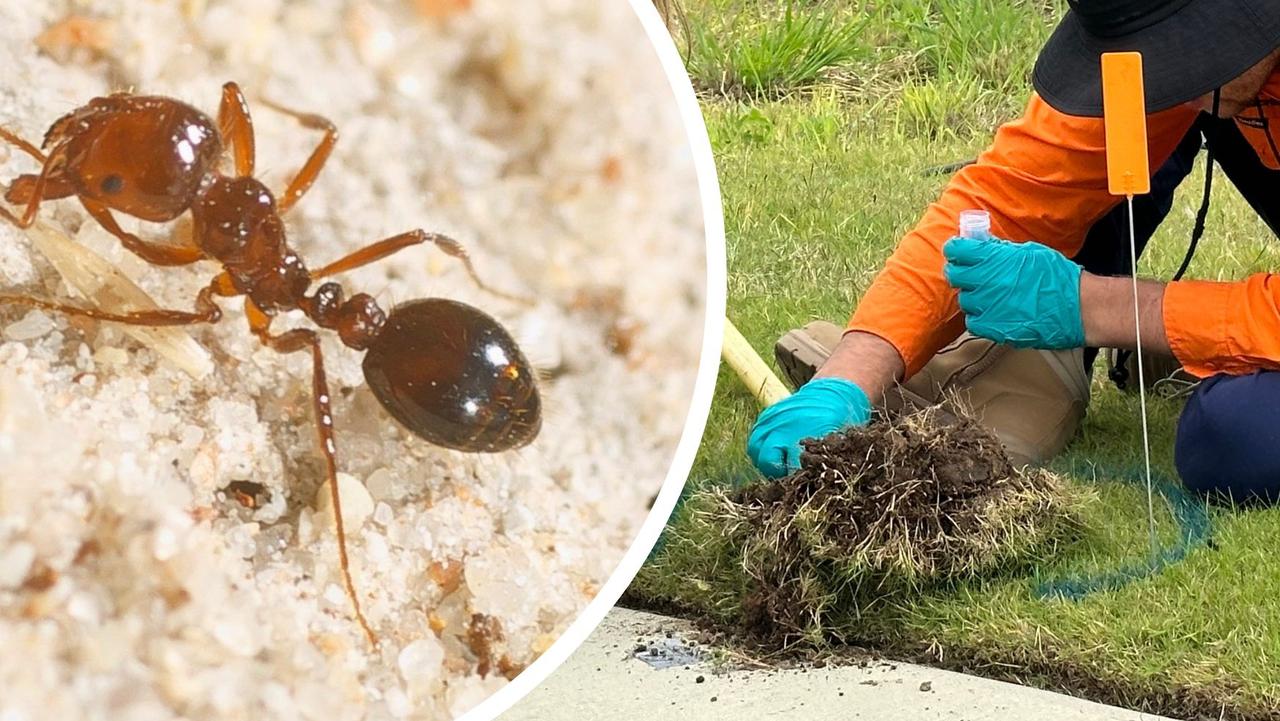
On Friday, imported red fire ants thought to have come from Queensland into NSW were found at a Tweed Shire Council industrial estate site about 30 kms from the border.

NSW Department of Primary Industries (DPI) has since eradicated five nests on the site.
Tweed Shire Council said on Wednesday surrounding land on the subdivision was baited to help prevent any further outbreaks, with DPI personnel and two sniffer dogs onsite.
Mr Andrew said the ants could “very well end up anywhere if they are in mulch or on a truck”.
“If there is any movement of product that hasn’t been confirmed as fire ant-free, the impact could be devastating,” he said.
“Queens can move up to 30km if they have wings, and that’s without being transported.
“They could theoretically end up in Melbourne in a couple of days.”
Mr Andrew said each nest could have “millions” of ants inside.

He said there had been no known interstate incursions of fire ants since 2001 when they were found in Brisbane. This is the first time such an outbreak has been recorded in NSW.
“If the populations aren’t controlled early things can get out of control,” he said.
Mr Andrew praised the work of the DPI and the National Fire Ant Eradication Program and said they were “working quickly to control the problem”.
He said funding was “critical” to biosecurity and “if the investment isn’t there – they will take over”.
“Fire ants are a very real threat. They have killed people (due to anaphylactic shock) in the United States, wiped out livestock and have decimated entire native ecosystems.
“The reality is they can radically change habitats and affect people’s experience outdoors.”
Mr Andrew said the species “probably has had more impact than any other introduced species in Australian history”.
He said the species can “build super colonies with multiple queens and millions of ants”.
“They are extremely aggressive and I urge the public to follow guidelines from the DPI or the National Fire Ant Eradication program, who have great resources on what to do if you think you have located a nest.”
“Don’t go and try and spray them yourself as it won’t eradicate the nest. The DPI will have information on how to safely photograph a suspected nest from a distance.”
A 5km exclusion zone has since been set up around the impacted site, with businesses and residents restricted in how they can move potential fire ant carrier materials without permission.

INTRODUCED SPECIES UNLEASHED
The incursion of fire ants in northern New South Wales highlights the ongoing challenges posed by introduced species gone rogue*. In Australia, infamous* examples include the cane toad, rabbits and camels.
Cane toads, originally introduced in the mid-20th century to control pests in Queensland’s sugarcane fields, rapidly spread across the country, decimating local fauna that lacked natural defences against their toxic secretions*. Similarly, rabbits, introduced for sport in the 18th century, became a major problem, overgrazing* vegetation and contributing to soil erosion.
Camels, brought in during the 19th century for transportation and labour, now roam vast* areas, impacting native flora and competing with local wildlife for resources.
POLL
GLOSSARY
- entomologist: a scientist who studies insects
- grim reality: unpleasant and harsh truth or situation
- incursion: the invasion or entry of something undesirable or harmful
- fire ants: a type of ant known for its aggressive behaviour and painful sting
- invasive pest: an unwelcome and harmful organism that spreads rapidly in a new environment
- vigilant: watchful and alert to detect and respond to potential dangers
- eradicated: completely destroyed or eliminated
- mulch: a layer of material covering the soil’s surface to retain moisture and control weeds
- interstate incursions: instances of organisms entering a state from another state
- biosecurity: measures to prevent the introduction and spread of harmful organisms
- anaphylactic shock: a severe allergic reaction that can be life-threatening
- decimated: drastically reduced in number or strength
- native ecosystems: natural environments with native plants and animals
- super colonies: large groups of ants with multiple queens and millions of individuals
- exclusion zone: an area where entry is restricted or prohibited
- carrier materials: objects or substances that can carry and spread pests
- 5km exclusion zone: a restricted area with a radius of 5 kilometres where movement is limited
- potential fire ant carrier materials: items that could transport and spread fire ants
- gone rogue: refers to a situation where something or someone deviates from the expected or established course of action
- infamous: well-known for a negative quality
- toxic secretions: substances produced and released by an organism that are poisonous
- vast: extremely large in size
EXTRA READING
Sheet-weaver spider swarm spins huge web
Superheroes here to save you from your fears
QUICK QUIZ
- Who is Nigel Andrew, and why does he describe the incursion of fire ants into northern New South Wales as a grim reality?
- What did the NSW Department of Primary Industries (DPI) do in response to the discovery of fire ants at the Tweed Shire Council industrial estate?
- According to Nigel Andrew, what potential dangers do fire ants pose, and how could they spread to different locations, including Melbourne?
- What is the significance of the 5km exclusion zone established around the impacted site, and why are businesses and residents restricted in their movements within this zone?
- What measures does Nigel Andrew suggest for the public to follow in dealing with suspected fire ant nests?
LISTEN TO THIS STORY
CLASS ACTIVITIES
1. Make the rules
What do you think should be the rules for the people who live in the 5km exclusion zone to stop the spread of fire ants and also to keep people and animals safe? Write a list of at least five rules. Next to each rule, write the reasons why you think it will help.
Time: allow at least 20 minutes to complete this activity
Curriculum Links: English, Science
2. Extension
Why is bio security such an important issue for Australia? Use information in the story to give you ideas and facts. Use these to create a poster or graphic about why bio security is so important.
Time: allow at least 30 minutes to complete this activity
Curriculum Links: English, Science, Visual Communication Design, Digital Technologies
VCOP ACTIVITY
To sum it up
After reading the article, use your comprehension skills to summarise in a maximum of three sentences what the article is about.
Think about:
- What is the main topic or idea?
- What is an important or interesting fact?
- Who was involved (people or places)?
- Use your VCOP skills to re-read your summary to make sure it is clear, specific and well punctuated.