
Alaskan town marks the start of two months of icy night-time
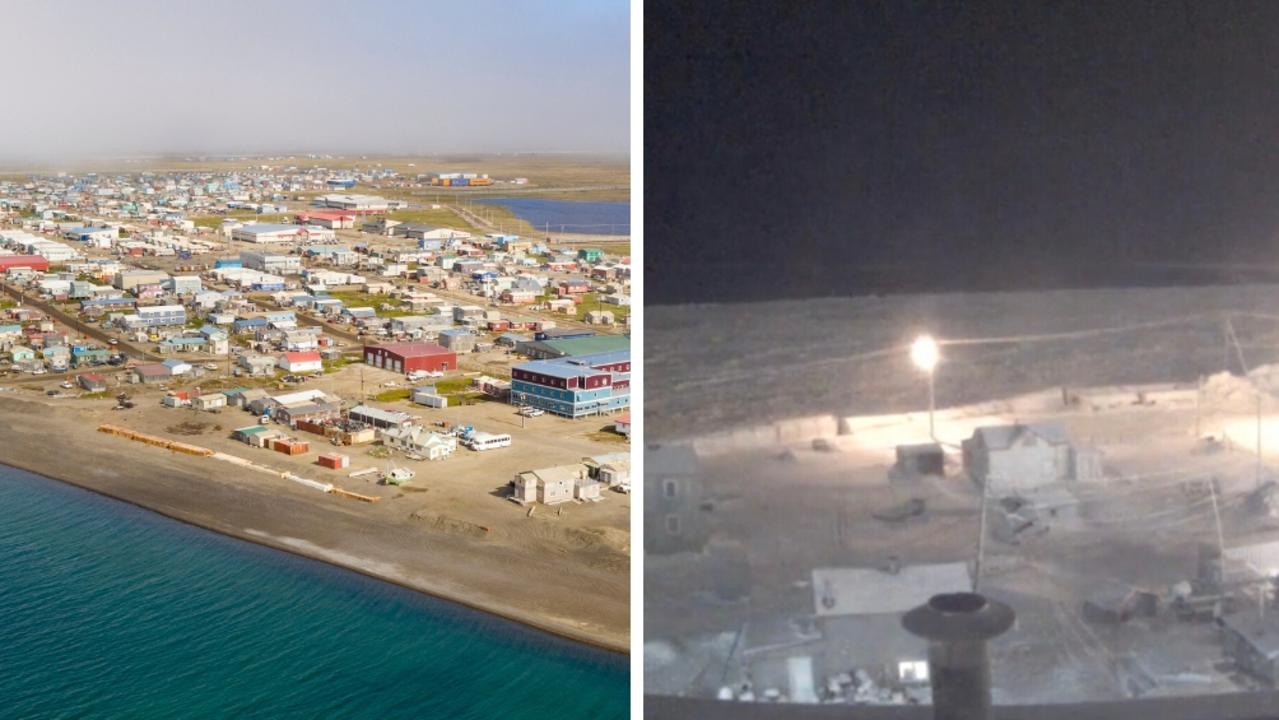
It will be a dark Christmas for the people of Utqiaġvik, Alaska who have marked the start of polar nights, where the sun doesn’t rise for two months and the temperature stays well below freezing



READING LEVEL: GREEN
A US city has plunged into two months of night-time, with its residents unable to see daylight until the end of January.
It will be a dark Christmas for the people of Utqiaġvik, Alaska, who have grown used to going without sunlight for more than two months each year.
The city is in the Arctic Circle, the topmost circle of latitude on Earth.
Because of the Earth’s slight tilt, the Arctic Circle is either fully exposed to the sun or completely shaded from it at different times of the year as the planet orbits.
In late November, the sun sets for the final time as the Arctic Circle enters two months of “polar nights” — a phenomenon in which night lasts for more than 24 hours.
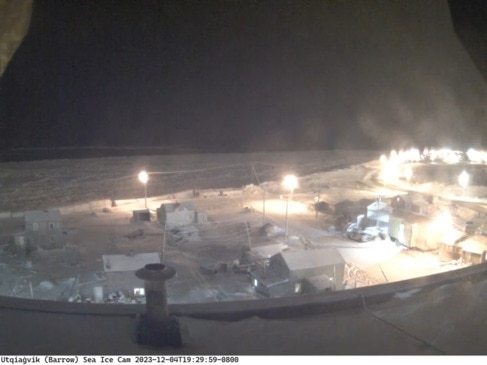
An eerie time lapse from the University of Alaska Fairbanks, taken from a sea ice cam at Utqiaġvik, showed the strange experience of 24 hours without sun.

In the clip, the sky turned from pale to bright blue, before pitch blackness came on for several hours. The waves crashed against “landfast ice” — frozen seawater that is stuck to the coast in cold climates — while a few people and cars shuffled about.
The glimmer of pale blue light seen at the start of the clip is known as “civil twilight”, when the light from the sun is just barely visible but the sun itself has not risen above the horizon.

Utqiaġvik, which is the northernmost city in the US, will not experience another sunrise until about 1:09pm local time on January 23, 2024.
Even then, the sun will only be up for about an hour.
After that date, daylight hours will get longer and longer throughout spring until reaching “midnight sun” — the opposite of polar night.
At that point, Utqiaġvik will see 24 hours of sunlight each day for several months.

The lack of sunlight also means chilly temperatures. On Wednesday, the temperature in Utqiaġvik is forecast to range from a low of -20C to a high of just -17C.
University of Alaska Fairbanks explained its Utqiaġvik sea ice cam helps to monitor not just day to day conditions but also longer-term environmental changes.
“Apart from providing a visual impression of the sea-ice conditions off (Utqiaġvik), these images establish a longer-term record of key dates in the seasonal evolution of the sea-ice cover.”
POLL
GLOSSARY
- circle of latitude: imaginary circles around the globe that run east to west
- phenomenon: something occurring
- time lapse: when a camera records images at a slow pace over a long period of time which are added to together to create a video
- visual impression: picture
- seasonal evolution: changes that occur in the weather and ice during each of the four seasons
EXTRA READING
World’s biggest iceberg sets sail
New island springs up near Japan
Lost continent found deep at sea
QUICK QUIZ
1. What is the name of the phenomenon where the sun doesn’t rise for two months in the Arctic Circle?
2. What is the name of its opposite, where the sun doesn’t set for several months?
3. When will the sun rise again in Utqiaġvik?
4. What was the maximum temperature forecast for Utqiaġvik on Wednesday?
5. Where on the planet is the Arctic Circle?
LISTEN TO THIS STORY
CLASSROOM ACTIVITIES
1. What would change?
How would being in darkness 24 hours a day change a typical day in your life? Write a story.
Time: allow at least 20 minutes to complete this activity
Curriculum Links: English, Science
2. Extension
How do you think it would feel to see the first sunrise after the two months of “polar nights”? Write a description that helps your reader understand exactly how it would feel.
Time: allow at least 20 minutes to complete this activity
Curriculum Links: English
VCOP ACTIVITY
To sum it up
After reading the article, use your comprehension skills to summarise in a maximum of three sentences what the article is about.
Think about:
What is the main topic or idea?
What is an important or interesting fact?
Who was involved (people or places)?
Use your VCOP skills to re-read your summary to make sure it is clear, specific and well punctuated.