
Sole survivor of the first team to climb Mt Everest is furious at what the mountain has become
The last living member from the team who first conquered Mt Everest says he is appalled by what’s happening on top of the mountain


READING LEVEL: GREEN
The last surviving member of the first mountaineering* expedition to conquer* Mount Everest is unhappy with the current state of the mountain, saying it is now crowded and dirty and not being revered* as the god that it is.
Kanchha Sherpa*, 91, was one of the legendary team of 35 to reach the summit* of the 8848m peak on May 29, 1953, with Sir Edmund Hillary and Tenzing Norgay.

“They should not be dirtying the mountain. It is our biggest god and they should not be dirtying the gods,” said Kanchha, a Sherpa from the Tibetan ethnic group* that lives in the mountains.
“Qomolangma* is the biggest god for the Sherpas but people smoke and eat meat and throw them on the mountain.”
Sherpas like Kanchha consider Everest as Qomolangma or “goddess mother of the world” and perform rituals* ahead of their climbs.
Since Kanchha’s inaugural* climb, thousands have trekked* up the world’s tallest mountain.
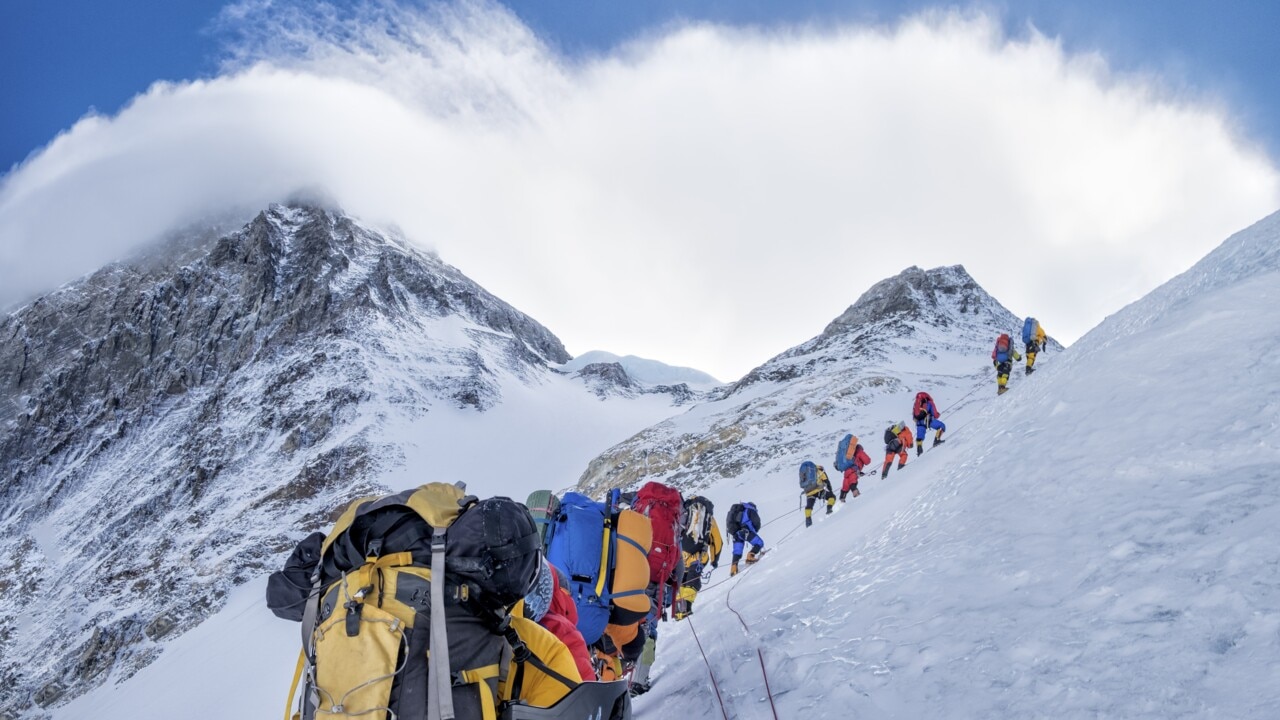
During the spring of 2023, 667 climbers scaled the peak, bringing thousands of support staff to the mountain’s base camp*.


Kanchha said a solution would be to limit the number of climbers allowed.
However, authorities* are not decreasing the number of permits* they issue.
“It would be better for the mountain to reduce the number of climbers,” “Right now there is always a big crowd of people at the summit.”


With increased numbers of visitors and also some who live on the mountain for months at a time, comes an influx of their garbage, which has sparked concern.
There are rules in place that state climbers must carry out their own trash and equipment or risk losing their deposit*, but enforcement* has proven ineffective.

“It is very dirty now. People throw tins and wrappings after eating food. Who is going to pick them up now?” said Kanchha, who lives in Namche village in the foothills* of Mount Everest.
“Some climbers just dump their trash in the crevasse*, which would be hidden at that time but eventually it will flow down to base camp as the snow melts and carries them downward.”
More than 310 people have died climbing Mount Everest since explorations first launched in the 1900s.
– with New York Post
GLOSSARY
- mountaineering: the sport or activity of climbing mountains
- conquer: to successfully overcome or climb a challenging peak
- revered: deeply respected or admired
- summit: the highest point of a mountain
- Sherpa: a member of a Tibetan ethnic group known for their skill in mountaineering and living in the mountains
- inaugural: the first or initial
- ethnic group: a community of people who share a common cultural or ancestral heritage
- Qomolangma: an alternative name for Mount Everest, meaning “goddess mother of the world”
- rituals: ceremonial actions or traditions performed as part of a religious or cultural practice
- trekked: to make a long and arduous journey, especially on foot
- base camp: the main camp at the bottom of a mountain where climbers prepare for their ascent
- permits: official documents allowing individuals to undertake a specific activity, such as climbing a mountain
- authorities: the governing bodies or officials in charge of managing and regulating activities
- foothills: the lower slopes of a mountain, hill, or range of hills
- crevasse: a deep crack or fissure in a glacier or ice sheet
- deposit: a sum of money paid as a security to ensure compliance with rules or agreements
- enforcement: the act of ensuring that rules or regulations are followed and applied
- EXTRA READING
Nepal celebrates 70 years of climbing Everest
Aussie teen’s triumphant Everest trek
Sherpa Kami summits Everest for record 25th time
New height agreed for Mount Everest
QUICK QUIZ
- Who is Kanchha Sherpa, and what was his role in the story?
- What is the alternative name for Mount Everest mentioned in the story, and what does it mean?
- According to Kanchha, why is Mount Everest considered a significant entity by the Sherpas?
- What solution does Kanchha suggest for the issues on Mount Everest?
- What environmental concern is raised in the story regarding the increasing number of climbers on Mount Everest?
LISTEN TO THIS STORY
CLASSROOM ACTIVITIES
1. Respecting the Mountain
The Chinese and Nepalese governments have a responsibility to ensure Mount Everest remains clean and untouched for many years to come, so as to remain the special place that it is.
Work with a partner and brainstorm five new rules/regulations or procedures that they should introduce to ensure the area remains a clean and sacred place.
1.
2.
3.
4.
5.
If people don’t obey the rules, what should the ramifications be?
Time: allow 20 minutes to complete this activity
Curriculum Links: English, Geography, Personal and social, Critical and creative thinking
2. Extension
For Kanchha Sherpa, and other locals that help people climb the mountain, how could they be involved in the preservation and governance of Mount Everest.
Could they educate possible climbers more on what the mountain means to them and their culture and history?
Time: allow 10 minutes to complete this activity
Curriculum Links: English, Intercultural, Personal and social, Critical and creative thinking
VCOP ACTIVITY
1. News: condensed
Identify the most important pieces of information in this article and write a condensed version of it using 50 words or less.
Draw a picture or diagram to support your condensed news story.
Time: allow 25 minutes to complete this activity
Curriculum Links: English, Science
2. Extension
Compare your condensed news story with a classmate. Did you both include the same information or are your stories quite different? Discuss your choices and then work together to create a final condensed version of the story that you both agree tells the important parts that a reader would need or want to know.
Time: allow 20 minutes to complete this activity
Curriculum Links: English