
Mobile phones banned in South Australian high schools
School’s back but for thousands of students in South Australia it will be a phone-free zone as the state joins others to ban the devices in classrooms and playgrounds
READING LEVEL: GREEN
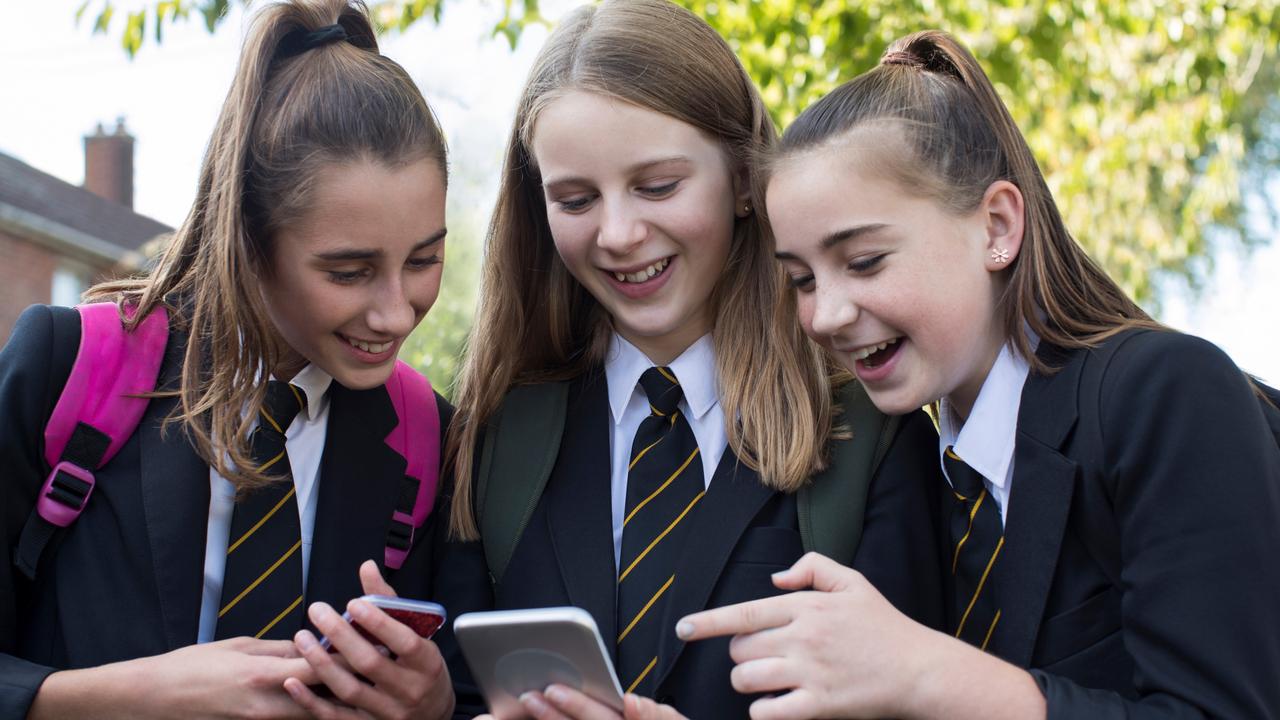
A ban on mobile phones has been introduced at 20 high schools in South Australia as students return to class for term one.
The move has brought the total number of schools participating in the phone ban to 45 – or a quarter of the state’s high schools.
All South Australian secondary schools will have to implement* the ban before the end of term two.

The move comes amid a nationwide push, with a number of schools in NSW and Queensland already enforcing the rules.
Victorian state primary and secondary schools also banned mobile phones in 2020 to tackle cyber-bullying and reduce distraction in the classroom.
Victorian students must switch off their phones and store them in their lockers from the start of the school day until the final bell.
Seaview High School in southern Adelaide is among those to implement South Australia’s ban.
The school has provided all 1300 students with a lockable lead-lined pouch which they are required to lock their phone inside during school hours. The measure is costing $30,000.
Students can only retrieve their phone from the locked pouches from stations at the school’s perimeter* after the bell at the end of the day.

Other South Australian schools that have opted out of using the lockable pouches are asking students to switch off their phones or put them in flight mode while they keep them stored away inside lockers or bags.
South Australian Education Minister Blair Boyer said a trial of the pouches at Port Lincoln High School proved popular, with students admitting they were better able to control their phone addictions.

Former federal opposition education spokesperson Tanya Plibersek said she supported any move that got kids to spend less time on the phone.
“It is distracting for kids to have their phones with them in class,” Ms Plibersek told Sunrise on Monday morning.
“Teachers are catching kids watching YouTube videos when they should be doing their maths. I think it is a sensible idea.”
The introduction of the South Australian school phone ban came days after NSW Opposition Leader Chris Minns suggested a similar ban would be “up and running in 2023”.
“(Putting) a ban in place should be quite straightforward, because it actually enables* teachers to make a distinction* and say: ‘You are not allowed to have your mobile phone’,” he said.
“They don’t have to decipher* whether that phone is being used to research an algebra* problem or to send a text message to a friend.”
GLOSSARY
- implement: to put into operation
- perimeter: the outer edge or boundary
- enables: allows, makes it possible for something to happen
- distinction: a difference between similar things
- decipher: to figure out, make out the meaning of
- algebra: a part of mathematics in which signs and letters represent numbers
EXTRA READING
Push for high school mobile phone ban
Kids quizzed by app to gain phone access
QUICK QUIZ
- How many South Australian schools introduced the phone ban for the start of term 1?
- How many South Australian schools in total have now implemented the ban?
- How long do the rest of South Australian schools have to implement the ban?
- Where are Seaview High School students putting their phones during the school day?
- What reason does Tanya Plibersek give for supporting the ban?
LISTEN TO THIS STORY
CLASSROOM ACTIVITIES
1. Phone ban
If you were a teenager at one of these secondary schools in South Australia or Victoria where mobile phones are banned, name your three best arguments as to why they should be allowed at school.
Teenager arguments:
1.
2.
3.
Now imagine you are a teacher at one of these secondary schools in South Australia or Victoria where mobile phones are banned. Name your three best arguments as to why they should be banned at school.
Teacher arguments:
1.
2.
3.
Time: allow 25 minutes to complete this activity
Curriculum Links: English, Health and Physical education, Personal and social, Critical and creative thinking
2. Extension
Work with a partner and have a three minute conversation on things that teenagers and adults do when on mobile phones that you find rude or annoying.
List your top five rude behaviours relating to mobile phones below:
1.
2.
3.
4.
5.
You may want to share these with your family tonight!
Time: allow 15 minutes to complete this activity
Curriculum Links: English, Personal and social, Critical and Creative thinking
VCOP ACTIVITY
Read with Kung Fu punctuation
Pair up with the article between you and stand up to make it easy to demonstrate your Kung Fu punctuation.
Practise reading one sentence at a time. Now read it again, while acting out the punctuation as you read.
Read and act three sentences before swapping with your partner.
Take two turns each.
Now ask your partner to read a sentence out loud while you try and act out the punctuation. Can you keep up? Swap over?
Try acting out two sentences – are you laughing yet?

Five simple ways kids can connect
Read more

Boy’s bird song wins hearts
Read more