
12 new moons discovered in Jupiter, taking total to 92
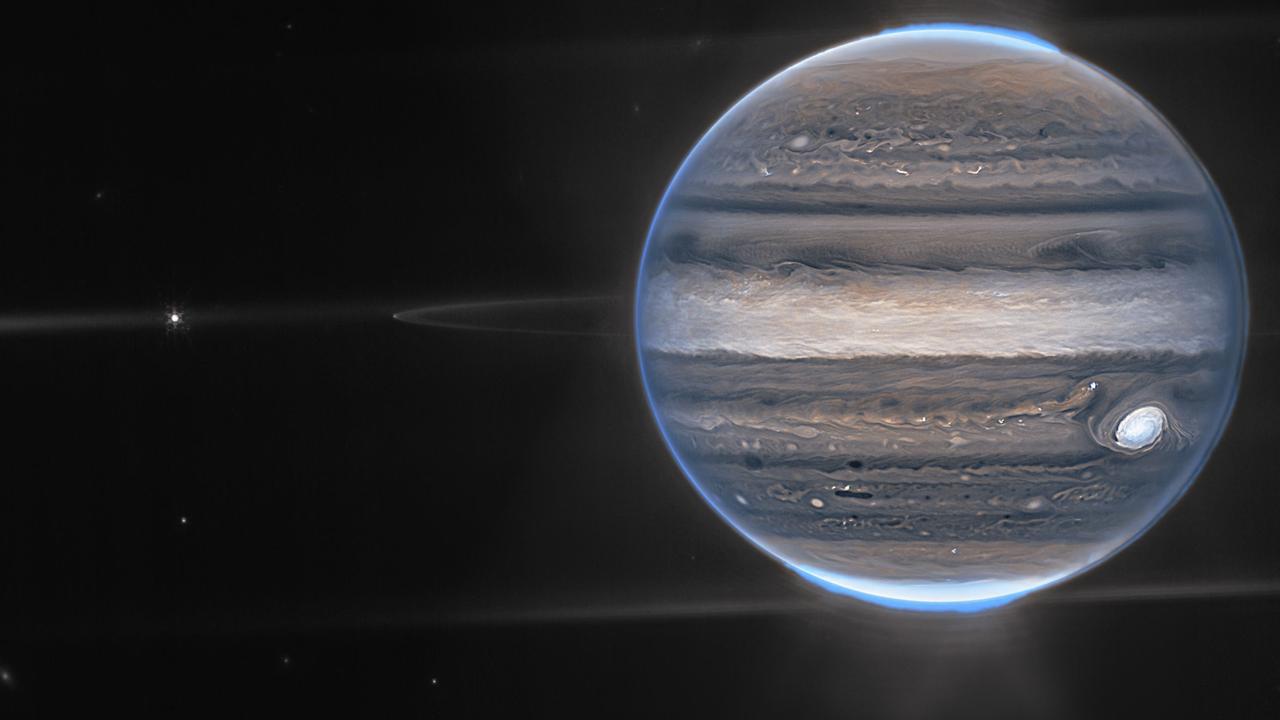
Astronomers have discovered 12 new moons around Jupiter, putting the total count at a record-breaking 92
READING LEVEL: GREEN
Astronomers have discovered 12 new moons around Jupiter, putting the total count at a record-breaking 92.
That’s more than any other planet in our solar system. Saturn, the one-time leader, comes in a close second with 83 moons.
The Jupiter moons were added recently to a list kept by the International Astronomical Union’s Minor Planet Center*, said Scott Sheppard who was part of the discovery team.
They were discovered using telescopes in Hawaii and Chile in 2021 and 2022, and their orbits were confirmed with follow-up observations*.
These newest moons range in size from one kilometre to three kilometres.
“I hope we can get an image of one of these outer moons close-up in the near future to better determine their origins,” said Sheppard.
In April, the European Space Agency is sending a spacecraft to Jupiter to study the planet and some of its biggest, icy moons. And next year, NASA will further explore one of Jupiter’s moons to see if it’s hiding an ocean beneath its frozen crust*.

Sheppard — who discovered quite a few moons around Saturn a few years ago and has taken part in 70 moon discoveries so far around Jupiter — expects to keep adding to the lunar tally*.

Jupiter and Saturn are loaded with small moons, believed to be fragments* of once bigger moons that collided with one another or with comets or asteroids.
The same goes for Uranus and Neptune, but they’re so distant that it makes moon-spotting even harder.
For the record, Uranus has 27 confirmed moons, Neptune 14, Mars two and Earth one. Venus and Mercury come up empty.
Jupiter’s newly discovered moons have yet to be named. Sheppard said only half of them are big enough — at least 1.5 kilometres or so — to qualify for a name.
GLOSSARY
- International Astronomical Union’s Minor Planet Center: the official body monitoring minor planets
- observations: a statement based on something one has seen, heard or noticed
- frozen crust: the ice outer layer of Jupiter
- lunar: to do with the Moon
- tally: the current score or amount
- fragments: small parts that have been separated from something
- comets: space objects made of ice and dust
- asteroids: small rocks circling the sun
EXTRA READING
Australia explores solar from space
Space junk on collision course with moon
International Space Station set for splashdown
QUICK QUIZ
- How many moons does Jupiter have?
- In April, what did the European Space Agency do?
- Aside from Jupiter, which other planet has lots of small moons?
- In which two countries were the telescopes that spotted the new moons?
- How many of Jupiter's new moons are big enough to qualify for a name?
LISTEN TO THE STORY
CLASSROOM ACTIVITIES
1. Graph the moons
Using the information contained in this article, create a bar graph visually representing the number of moons each planet has.
A bar graph should have a title, two clearly labelled axes, a legend and the source of the data.
Time: allow 30 minutes to complete this activity
Curriculum Links: mathematics
2. Extension
Brainstorm at least three possible names for some of the newest and biggest new moons discovered around Jupiter.
–
–
–
Time: allow 15 minutes to complete this activity
Curriculum Links: English, science, Critical and creative thinking
VCOP ACTIVITY
To sum it up
After reading the article, use your comprehension skills to summarise in a maximum of three sentences what the article is about.
Think about:
- What is the main topic or idea?
- What is an important or interesting fact?
- Who was involved (people or places)?
Use your VCOP skills to re-read your summary to make sure it is clear, specific and well punctuated.

Bold space fuel plan lifts off
Read more

Strange shape found over Saturn
Read more